A healing community, not just a treatment centre
Punarjjany was never built to be an institution people are sent to and processed through. It was built by someone who had lived through alcoholism himself — Dr. Johns K. Mangalam — around the belief that people heal fastest in a community that treats them with dignity, not confinement.
Before founding Punarjjany, Dr. Mangalam visited a number of existing de-addiction centres to see their methods firsthand, drawing on his own experience as someone who had once feared and mistrusted the very idea of a treatment centre. What he saw convinced him Kerala needed a genuine alternative. As a wounded healer himself, he wanted the world to understand something he had learned the hard way: that alcoholism is a family disease, not a personal moral failing — and that with the right support, a person can recover fully and go on to live a meaningful life.
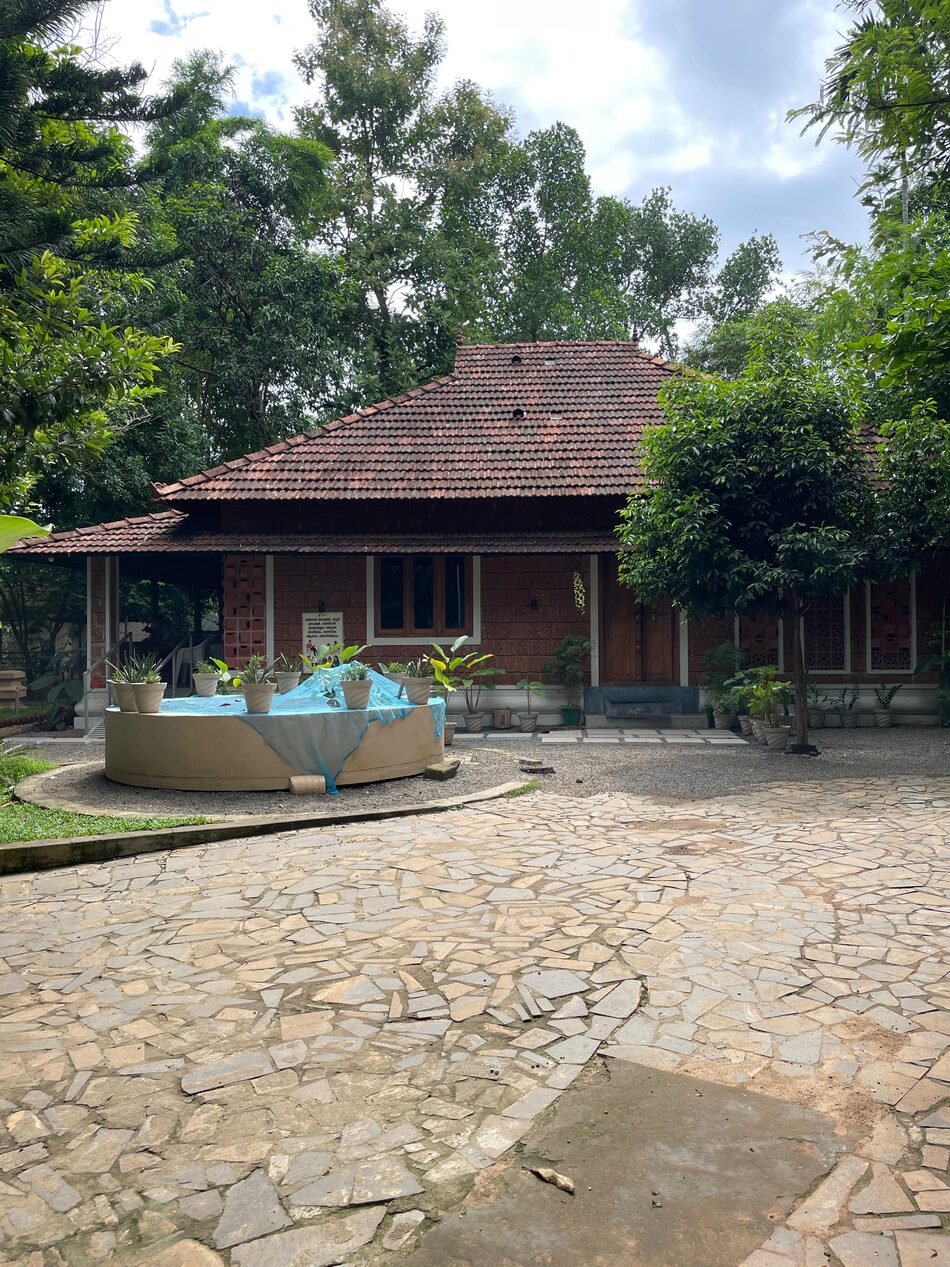
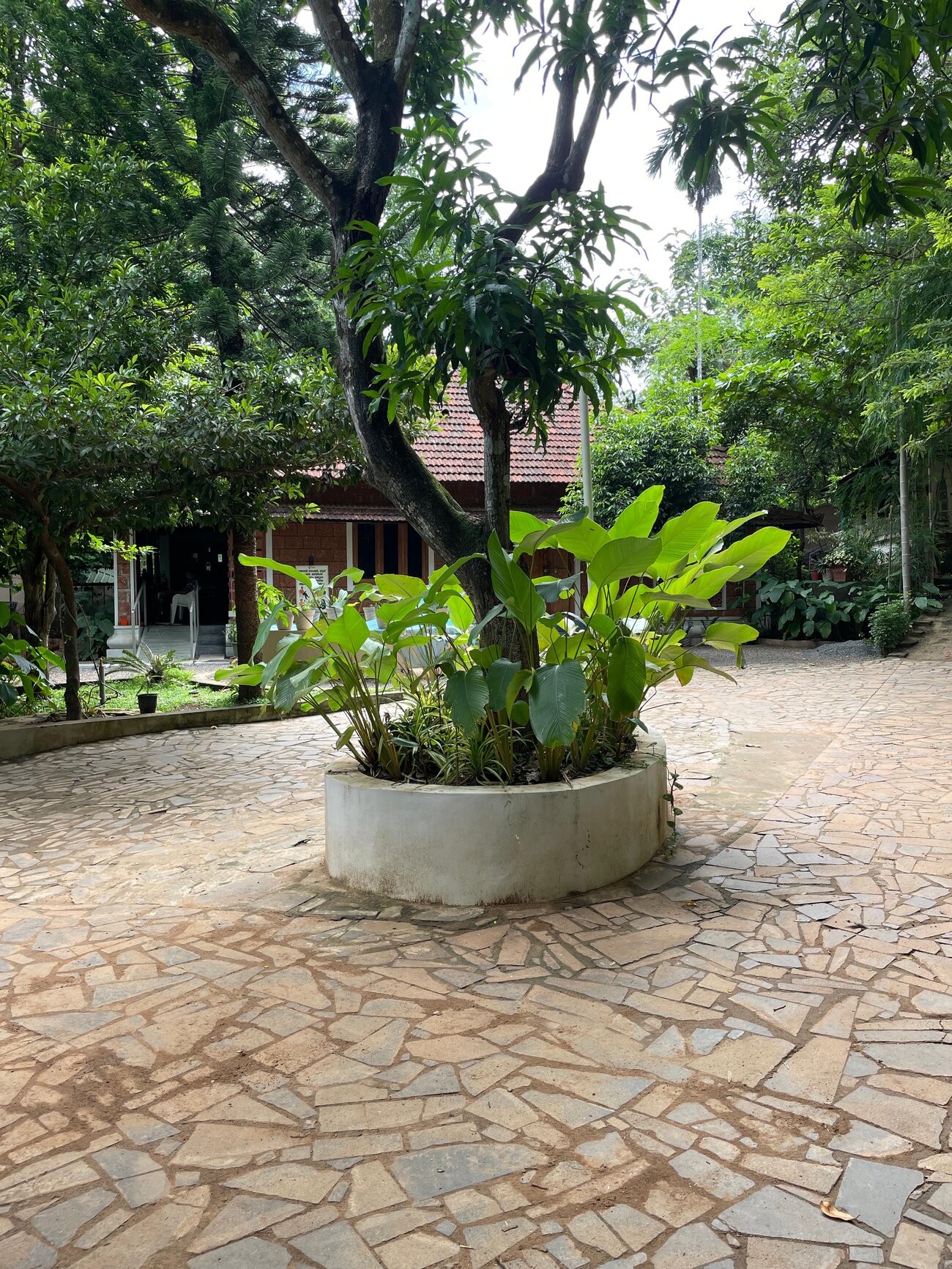
There are no locks and no compulsory rituals on campus. Residents and their accompanying family member live, cook, and take part in daily activities together in gender-wise dormitories, in a setting beside the quiet, natural surroundings of the Poomala dam — an environment designed around belonging, not isolation.
Biological healing through Ayurveda
Years of alcohol use take a physical toll on the body and nervous system. Alongside medical oversight, every resident's plan draws on traditional Ayurvedic therapies to support natural detoxification, ease withdrawal-related stress, and calm a system that's been under strain for a long time.
- ✓
Abhyangam
Full-body warm-oil massage that eases tension, improves circulation, and grounds residents ahead of the day's therapy.
- ✓
Shirodhara (Dhara)
A steady stream of warm herbal oil poured over the forehead to calm the nervous system.
- ✓
Nasyam
Nasal administration of medicated oils used to clear the head and ease tension during withdrawal.
- ✓
Uzhichil
Traditional full-body herbal-oil massage supporting circulation and the body's natural detoxification.
- ✓
Relaxation Therapies
Guided rest and calming practices that lower the physical stress load of early recovery.
- ✓
Rejuvenative Body Treatments
Supportive therapies aimed at restoring physical strength and vitality worn down by years of drinking.
Understanding the root cause of addiction
We don't treat drinking as the problem in isolation — it's usually a symptom. Our clinical psychologist works with every resident to understand what's actually underneath the addiction: unresolved trauma, chronic stress, relationship breakdowns, undiagnosed mental health conditions, or years of learned coping through alcohol. Treating the root cause, not just the symptom, is what makes recovery more likely to last.
Individual counselling built around each person
Every resident receives one-on-one counselling, drawing on a mix of evidence-informed approaches suited to where they are in their recovery:
- ✓
Motivation Enhancement
Building the resident's own internal reasons to change, rather than relying on outside pressure alone.
- ✓
Relapse Prevention
Practical planning for the situations most likely to trigger a return to drinking after discharge.
- ✓
Trigger Identification
Mapping the specific people, places, and emotions that have historically led to drinking.
- ✓
Coping Skills Training
Concrete, practiced alternatives to reaching for alcohol under stress.
- ✓
Psychoeducation
Helping residents understand addiction as a treatable illness, not a personal moral failing.
- ✓
Emotional Regulation
Learning to sit with difficult emotions without needing to numb them.
- ✓
Behavioural Interventions
Structured techniques to interrupt and replace long-standing drinking behaviours and routines.
- ✓
Personal Recovery Planning
A written plan each resident takes home, mapping out their own path after the 21 days end.
Family therapy & relationship healing
Addiction rarely affects only the person drinking — it reshapes an entire household. That's why a spouse or parent stays on campus for the full 21 days, taking part in dedicated family counselling sessions led by our medical social workers. These sessions help families understand addiction as an illness, rebuild communication that's often broken down over years, and prepare, together, for what recovery looks like once they're back home.
A fully structured therapeutic day
Structure is deliberate — for many residents, addiction has meant years without a stable daily rhythm. A typical day moves through:
- Early Morning
Morning Wellness Activities
Yoga, pranayama, and gentle movement to start the day grounded and present.
- Morning
Ayurvedic Therapy & Breakfast
Rotating therapies such as Abhyangam or Dhara, followed by a nutritious breakfast.
- Mid-Morning
Psychoeducational Group Sessions
Group learning on addiction, recovery, and the science behind both.
- Late Morning
Individual & Family Counselling
One-on-one sessions with our psychologist, and joint sessions with the accompanying family member.
- Afternoon
Expressive & Healing Therapies
Art, music, journaling, and other expressive outlets that give residents new ways to process emotion.
- Late Afternoon
Recreation & Positive Activities
Games, walks, and shared activities that rebuild the ability to enjoy life without alcohol.
- Evening, 7 PM
Evening Reflection
A recorded video session by our founder, Dr. Johns K. Mangalam, still played for every resident — his voice, method, and philosophy remaining part of every recovery journey on the campus he built.
- Night
Dinner & Rest
A calm close to the day, ahead of the next morning's routine.
This is a representative outline of a typical day. Timings adjust around each resident's medical needs and the season.
Psychiatric care for a smooth recovery
Withdrawal can be medically serious, which is why every resident is assessed by our MBBS doctor and MD psychiatrist. We encourage the body's natural detoxification process wherever it's safe to do so, and use medication only when a qualified doctor judges it clinically necessary — never as a first resort. We maintain a working relationship with partner hospitals for any care that goes beyond what our campus can safely provide.
Nutritious food & comfortable residential care
Recovery is physical as much as it is emotional. Punarjjany serves both vegetarian and non-vegetarian meals, prepared largely by residents themselves. Cooking and cutting vegetables together is a deliberate part of the programme, not just a chore — the ladies and gentlemen on campus work side by side in the kitchen, and those shared hours often become some of the most honest conversations of the day. Talking over a chopping board, residents open up in a way that feels less clinical than a counselling room, sharing what they've been through and, often, releasing trauma and hardship they've carried quietly for years. It's one more way Punarjjany treats recovery as something built through community, not just prescribed by a doctor.
Residents stay in clean, simple, gender-wise dormitory accommodation alongside their accompanying family member. It's a deliberately unfussy, homely setting — the focus stays on healing, not on hotel-style comfort.
The goal of the 21-day programme
Twenty-one days will not undo years of drinking on their own — no honest programme claims that. What we aim for is a resident who leaves physically stabilised, who understands their own triggers and has practiced real coping tools, and a family that leaves better equipped to support them, together, for the years of recovery that follow. Since 2004, that combination — of body, mind, and family, treated together — is what more than 20,000 family members have walked through Punarjjany's doors to find.